Criminology and Criminal Justice, BS
Program Details
- Location
- Akron Campus
- Level
- undergraduate
- Academic Pathway
- major
- Degree/Program Type
- Bachelor of Science
- Format
- In-person
- Course Info
- Course Info
- College
- Buchtel College of Arts & Sciences (BCAS)
- School/Department
- Criminal Justice Studies
Program Contact
- David A. Licate, Ph.D.
-
Department Chair and Professor
330-972-7392
Overview
Earn your Bachelor of Science in Criminology and Criminal Justice at The University of Akron and prepare for careers in law enforcement, courts, corrections, public safety, private security and more.
You’ll build a strong foundation in criminal justice, sociology and political science before choosing a concentration in Policing, Courts and Law, Corrections or Criminology, allowing you to focus on the path that fits your goals.
Flexible options, including 100% online and hybrid formats, let you earn your degree on your schedule. You can also receive credit for prior experience and training, including police academy coursework.
- Degree-seeking students may complete the UA-Summit County Police Academy while earning their degree.
Admissions Requirements
Applicants must meet the general admission requirements of The University of Akron. Credit for prior learning may be available for military and working professionals.
Career Outcomes
With a B.S. in Criminology and Criminal Justice, you’ll be prepared for employment across all levels of the criminal justice system: local, state, and federal. Graduates pursue careers in policing, investigation, courts, corrections, homeland security, and the private sector.
Potential roles include:
Policing and investigation at the local, county, state, and federal levels, including police and sheriff’s departments, state highway patrol, U.S. Marshals, FBI, DEA, and ATF.
Work in the courts including court professionals such as bailiffs, victim advocates, lawyers, or judges.
Work in corrections including Correctional administrators, probation officers, or substance abuse/mental health treatment specialists.
Homeland security work such as counterterrorism, critical infrastructure protection, or intelligence analysis.
Private security and risk management work including corporate investigation and fraud examination.
YES, some things just set us apart.
Whether you're beginning your college journey or advancing your career, you'll benefit from a nationally recognized program designed to prepare you for success through practical learning and flexible pathways.
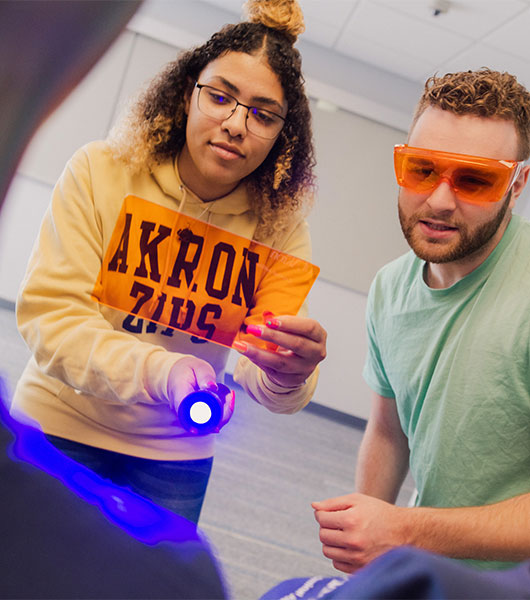

Hands-On Learning
Built for Real-World Success
Developed by practitioners, this program blends theory with applied learning to help you translate knowledge into practical skills for the field.

Flexibible Learning
Designed for Your Schedule
Complete your degree fully online while learning from the same expert faculty who teach on campus, with a structure that supports working professionals and nontraditional students.
100% online degree
National Recognition
A Top-Ranked Criminal Justice Program
Ranked No. 11 among criminal justice programs nationwide and No. 2 among Ohio universities by Intelligent.com (2024), this program is recognized for its quality and career-focused curriculum.
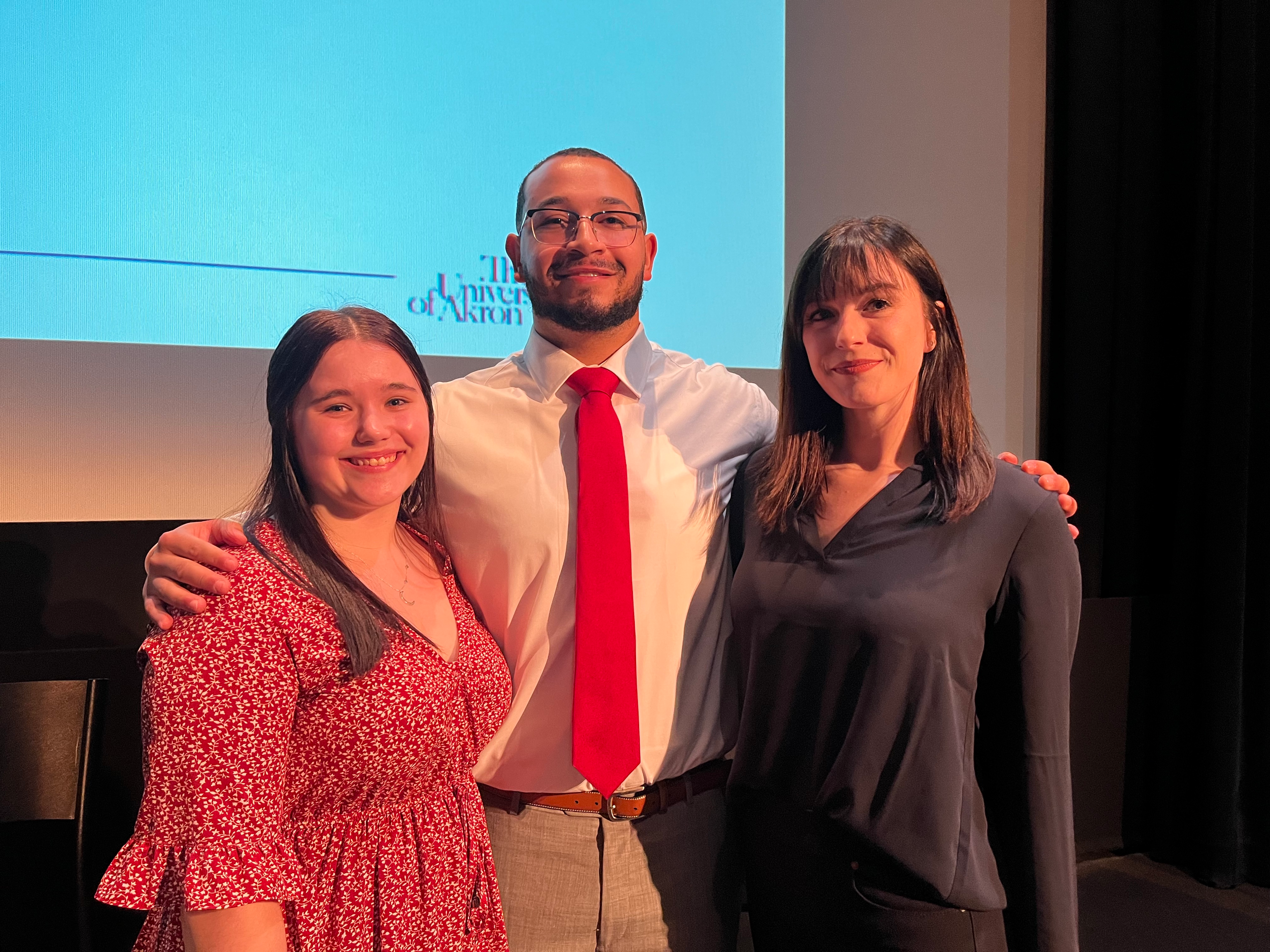
Find Your Community
UA has several active student organizations that will improve your educational and social experience by connecting classroom insights to real world problem solving, and boost your networking in the field.
Criminal Justice Association, Faculty adviser, Sarah St. George
Ohio Innocence Project, Faculty adviser, Daniela Jauk-Ajamie
Pre-Law Society, Faculty advisers, Jim McHugh and Phil Marcin
Sociology Club, Faculty adviser, Insun Park
Why Choose Criminology & Criminal Justice
Explore what you'll study, the skills you'll gain and the career paths you can pursue. With four specialized tracks and hands-on learning opportunities, you'll customize your degree to match your interests and professional goals.
Every student begins with a strong foundation in criminology and criminal justice before choosing a specialized track. Through coursework in criminal law, policing, corrections, sociology and political science, you'll examine how the justice system functions, why crime occurs and how policies shape outcomes for individuals and communities.
You'll explore topics including:
- Criminology and theories of criminal behavior
- Criminal law, courts and legal processes
- Policing strategies and correctional systems
- Research methods and data analysis
- Social inequality and its impact on the justice system
- The role of public policy in criminal justice
By combining legal, social and research perspectives, you'll develop a comprehensive understanding of the criminal justice system and the complex issues facing communities today.
Every student builds a strong foundation in criminology and criminal justice before choosing one of four specialized tracks. Each concentration combines focused coursework, electives and experiential learning to prepare you for careers aligned with your interests.
Policing
Study modern policing through courses in crime analysis, policing strategy and public safety. Explore leadership, investigations and community-focused approaches while preparing for careers in law enforcement and public safety. Prior learning assessment and eligible police academy coursework may apply toward elective requirements.
Courts and Law
Examine the legal system from investigation through trial. Study criminal law, criminal procedure, evidence, the judicial process and the relationship between law and society to prepare for careers in the courts, legal services and related fields.
Corrections
Focus on offender rehabilitation, juvenile justice, probation and parole, and the social factors that influence criminal behavior. Learn how correctional systems support accountability, treatment and successful community reintegration.
Criminology
Explore why crime occurs and how society responds through the study of criminology, sociology of law, deviant behavior and related electives. Build research and analytical skills that prepare you for careers in policy, research, advocacy and graduate study.
Success in criminal justice requires strong analytical thinking, effective communication and a commitment to ethical decision-making. Throughout the program, you'll develop the knowledge and professional skills needed to serve communities, evaluate complex issues and make informed decisions in a variety of justice-related careers.
You'll graduate prepared to:
- Analyze criminal behavior and trends within justice systems.
- Communicate effectively in professional, legal and community settings.
- Apply research, data and evidence-based practices to real-world challenges.
- Evaluate criminal justice policies, procedures and outcomes.
- Interpret legal concepts and their impact on individuals and communities.
- Work effectively with people from diverse backgrounds while demonstrating empathy, professionalism and sound judgment.
Because many criminal justice careers involve enforcing laws, administering justice and handling sensitive information, employers often seek candidates with strong ethical standards. Many positions also require a background check before employment.
Learning extends beyond the classroom through internships that prepare you for your career. Gain practical experience while building your professional network with opportunities that fit your interests and schedule.
You'll have access to:
- Internships with local, state and federal agencies
- Opportunities in Washington, D.C., and other locations
- Flexible part-time and full-time internship placements
- Experiences that strengthen your résumé and prepare you for employment
Students have completed internships with organizations such as the U.S. Marshals Service, Summit County courts, local police departments, state corrections offices, and prosecutors' and public defenders' offices.
Securing the "Dawg" Pound
A degree in criminology and criminal justice prepares you for careers that protect communities, uphold justice and improve public safety. Graduates pursue opportunities with local, state and federal agencies, as well as nonprofit organizations and private employers.
Law Enforcement
Serve in policing and investigative roles with local police and sheriff's departments, state highway patrols, or federal agencies such as the U.S. Marshals Service, FBI, DEA and ATF.
Courts and Legal Services
Support the justice system through careers in the courts, victim advocacy, probation and parole, or continue your education through law school.
Corrections and Rehabilitation
Help individuals successfully reenter society through careers in correctional facilities, community supervision, rehabilitation programs and behavioral health services.
Homeland Security and Investigations
Protect people, organizations and critical infrastructure through intelligence analysis, counterterrorism, corporate investigations, fraud examination and risk management.
Graduates also find opportunities with law enforcement agencies, courts, correctional institutions, government organizations, nonprofit and community agencies, healthcare systems, insurance companies and other private-sector employers.