Engineering the next beat in heart valve implants
Dr. Hossein Ravanbakhsh, a University of Akron assistant professor of biomedical engineering, is leading undergraduate and graduate student researchers who are developing the next generation of heart valve implants.
By Jessica Whitehill
Heart valve implants transform the lives of millions of people worldwide who have cardiovascular disease. Yet current valve replacement options are not suitable for everyone. Valves may require invasive open-heart surgery or have limitations in durability and performance, especially for older and high-risk patients.
Dr. Hossein Ravanbakhsh, a University of Akron (UA) assistant professor of biomedical engineering, is leading undergraduate and graduate student researchers who are developing the next generation of heart valve implants.
To support development of these implants, Ravanbakhsh received a $200,000 American Heart Association Institutional Research Enhancement Award. “This project represents a shift toward smarter, less invasive and more patient-centered cardiovascular implants, solutions designed not just to replace damaged tissue, but to work with the body,” Ravanbakhsh said.
Compared with traditional open surgeries, minimally invasive procedures offer faster patient recovery and lower health care costs. The challenge, however, is that these procedures require implants that can be introduced in a compact form and reliably change shape to conform to the patient’s body.
Researchers will create heart valve implants that can be delivered through small incisions and adapt to the body after implantation. The project will generate insights into the behavior of shape-memory polymers during high-resolution 3D printing, provide design guidelines for shape-morphing constructs and establish foundational principles for future deployable biomedical devices.
Crucial outcomes
As the worldwide population ages, this research has become crucial for future treatment of heart disease and other conditions.
“Developing materials and manufacturing methods that allow implants to undergo predictable shape transformation after delivery could open new possibilities for minimally invasive treatments,” Ravanbakhsh said.
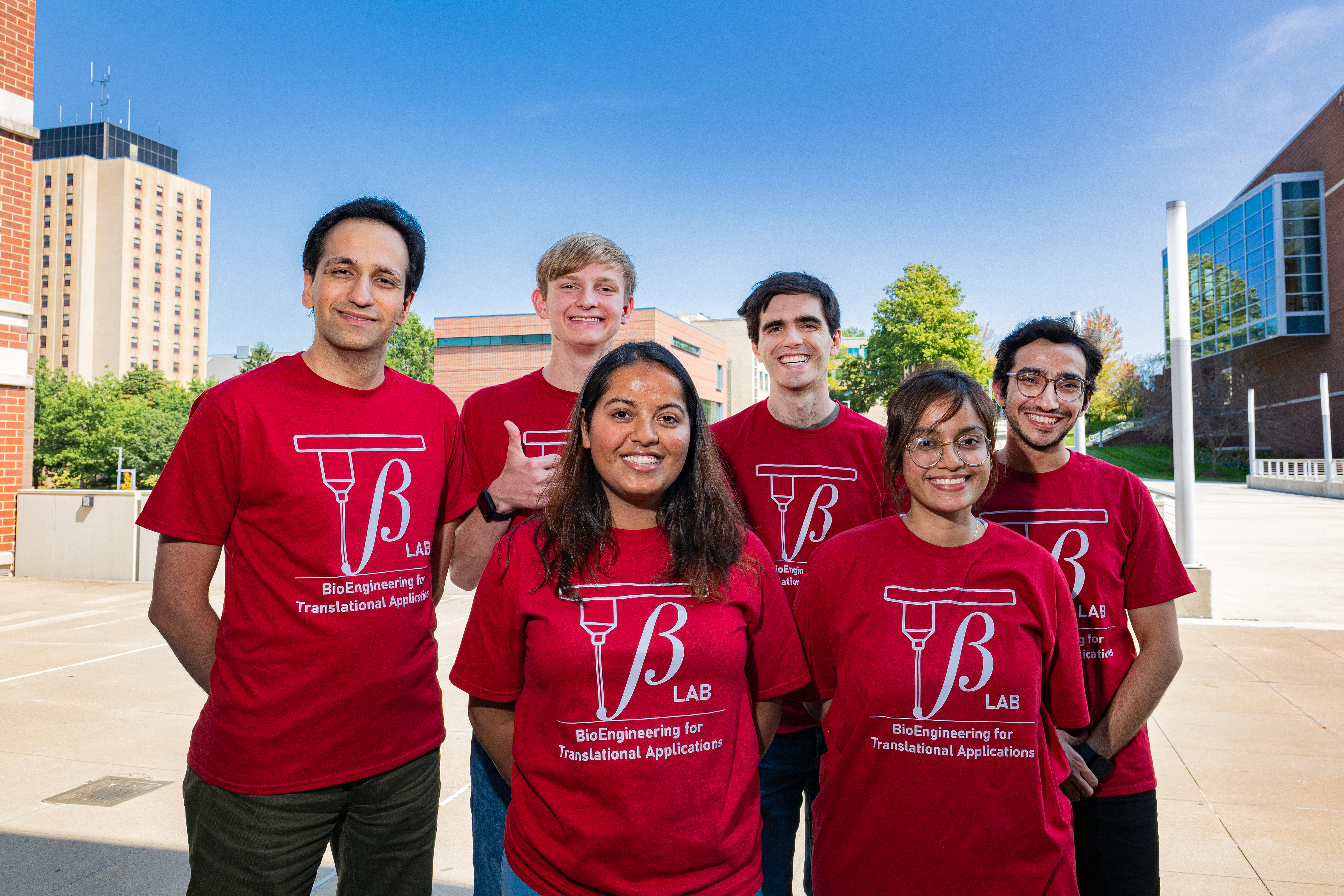
The award gives students in UA’s BioEngineering for Translational Applications Laboratory (BETA Lab), which Ravanbakhsh directs, the opportunity to work at the intersection of engineering, materials science and medicine. The BETA Lab is focused on functional biomaterials and biofabrication technologies for tissue engineering, regenerative medicine and therapeutic applications.
“Students gain practical expertise in heart valve engineering, additive manufacturing, and interdisciplinary research, preparing them for impactful biomedical engineering careers,” Ravanbakhsh said.
Media contact: media@uakron.edu

In fall 2024, The University of Akron (UA) and the Cleveland Browns forged a strategic partnership that is already making a significant impact on students.

From WZIP’s evolving programming to Operation Teach and new legal leadership, UA is driving progress in media, education and administration.

Zippy has always stood out from the crowd. Now, she’s making history yet again — this time by signing a groundbreaking Name, Image and Likeness (NIL) deal.