The University of Akron receives NSF funding to continue REU program in polymer science and engineering
Undergraduate students will gain hands-on research experience in advanced and sustainable materials through UA’s NSF-supported REU program.
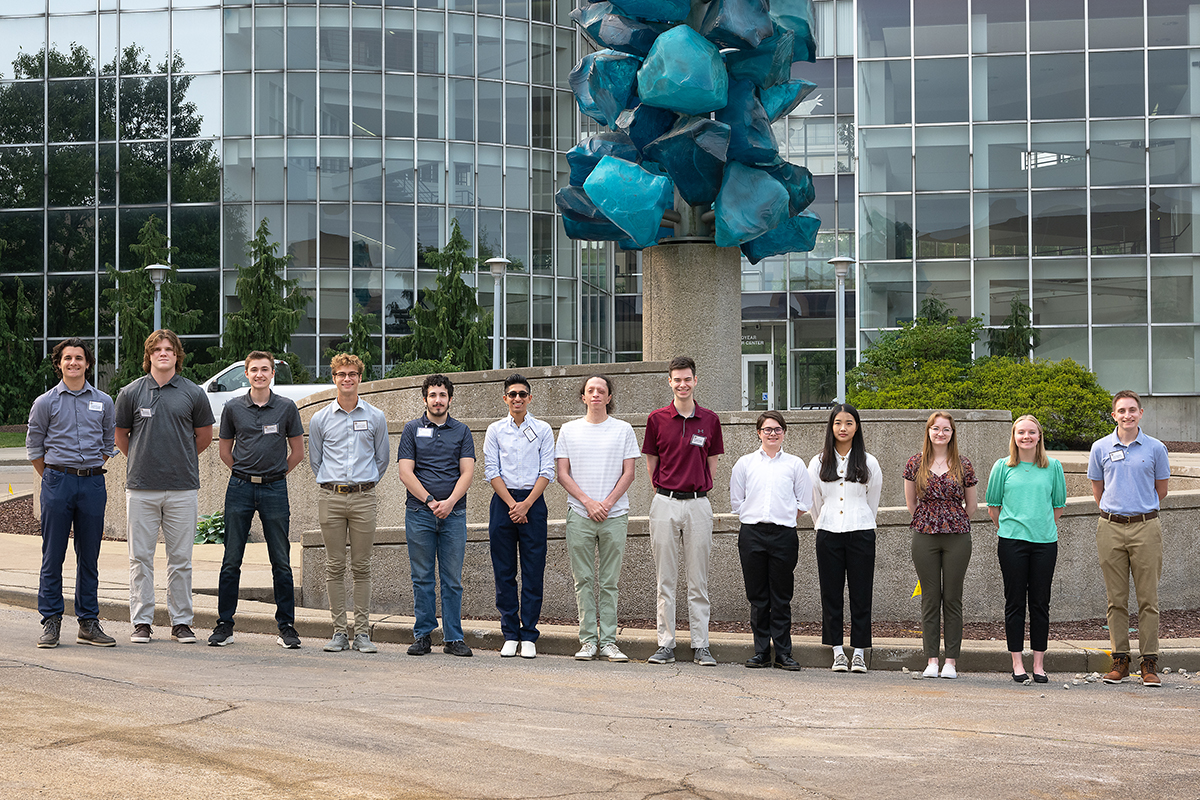
The School of Polymer Science and Polymer Engineering (SPSPE) at The University of Akron (UA) has received $362,000 in renewed funding from the National Science Foundation (NSF) to continue its long-running Research Experiences for Undergraduates (REU) program in polymer science and engineering. The program indicates UA as an REU site for intensive research by undergraduate students in any area of research funded by NSF.
Titled “REU Site: Polymer Research & Innovation Summer Mentorship,” the program is led by Dr. Mesfin Tsige, professor in the School of Polymer Science and Polymer Engineering, who has directed the REU site since 2014 and built on its strong foundation and sustained impact.
“This continued support from NSF reflects the strength of our program and our commitment to preparing undergraduate students for the next generation of challenges in sustainable materials and advanced manufacturing,” Tsige said.
The University's REU site will host nine undergraduate students for a nine-week immersive research experience. The program advances SPSPE’s commitment to a comprehensive research environment that integrates foundational polymer science with hands-on, cutting-edge research. Students begin with a Foundations and Data Bootcamp introducing core concepts in polymer science, responsible research practices and emerging tools in data science and machine learning. They then move into faculty-mentored research projects spanning sustainable and reprocessable polymer systems, data-enabled materials discovery and functional materials for advanced manufacturing.
The REU program has a strong record of attracting undergraduate students from across the United States, including those from institutions with limited research opportunities. A central goal of the program is to broaden participation in research, with particular emphasis on students from primarily undergraduate institutions. Participants also engage in professional development activities, including seminars, panel discussions and training in scientific communication. Industry engagement and site visits further expose students to real-world challenges in polymer science and engineering, preparing them for graduate study as well as careers in academia, industry and government laboratories.
Since its launch in 2004, the REU site at UA has engaged more than 320 undergraduate students in polymer research and education, resulting in more than 70 peer-reviewed publications and numerous external presentations. Alumni have gone on to pursue graduate study and careers across the polymer sector. Since assuming leadership of the program in 2014, Tsige has expanded its scope and strengthened its interdisciplinary and collaborative framework.
Building on this foundation, the renewed program introduces a transition-to-practice emphasis that connects laboratory discoveries to standards-aware evaluation, pilot-scale processing and industry partner mentorship. The goal is to strengthen both research impact and workforce readiness by bridging the gap between fundamental discovery and real-world application.
“What makes this program special is seeing students grow from early exposure to real research into confident scholars who can ask meaningful questions, work through challenges and contribute to the field in a short amount of time,” Tsige said.
Three UA faculty members have each earned a Fulbright research award for the 2026-27 academic year.
From company tours and faculty-led sessions to hands-on activities and campus experiences, high school students spent five days exploring engineering disciplines, connecting with pee ...
Recent engineering alumna Sarah Beyea gained valuable real-world experience through co-ops and hands-on learning. But some of the most meaningful growth in her time at Akron hasn&rsq ...