Sponsor a Capstone Project
Do you have a medical device challenge or unmet clinical need that could benefit from a fresh perspective? Partner with senior Biomedical Engineering students at The University of Akron to explore potential solutions through a hands-on design experience.
Student teams work with industry sponsors and clinical mentors to investigate real-world problems, develop design concepts and build prototypes. Your expertise helps guide their work while giving students valuable experience applying engineering principles to biomedical challenges.
Have a project idea? Email Dr. Justin Baker to discuss sponsorship.
Partnering with a student team gives your organization an opportunity to explore a design challenge while helping prepare the next generation of biomedical engineers.
Sponsors collaborate with a team of approximately four to six senior Biomedical Engineering students throughout the academic year.
Sponsor commitment includes:
The ideal project is a challenge that is valuable to your organization but is not on the critical path for business operations. Students can make meaningful progress on a design challenge, but a finished, market-ready product is not guaranteed.
Nondisclosure agreements (NDAs) may be arranged when appropriate. Intellectual property and confidentiality expectations are discussed on a case-by-case basis with the sponsor and university before the project begins.
The Capstone experience begins as early as the spring semester of students' junior year, when they identify an unmet clinical need to explore. During their senior year, teams follow a structured design process with faculty guidance and sponsor input.
Throughout the process, teams present their progress at design reviews and incorporate feedback. Project management responsibilities rotate among students, giving each team member experience leading project activities.
Past Biomedical Engineering Capstone projects have explored challenges in surgery, wound care, drug delivery, patient monitoring and medical training.
These projects demonstrate how students apply biomedical engineering principles to investigate unmet needs and develop potential solutions.
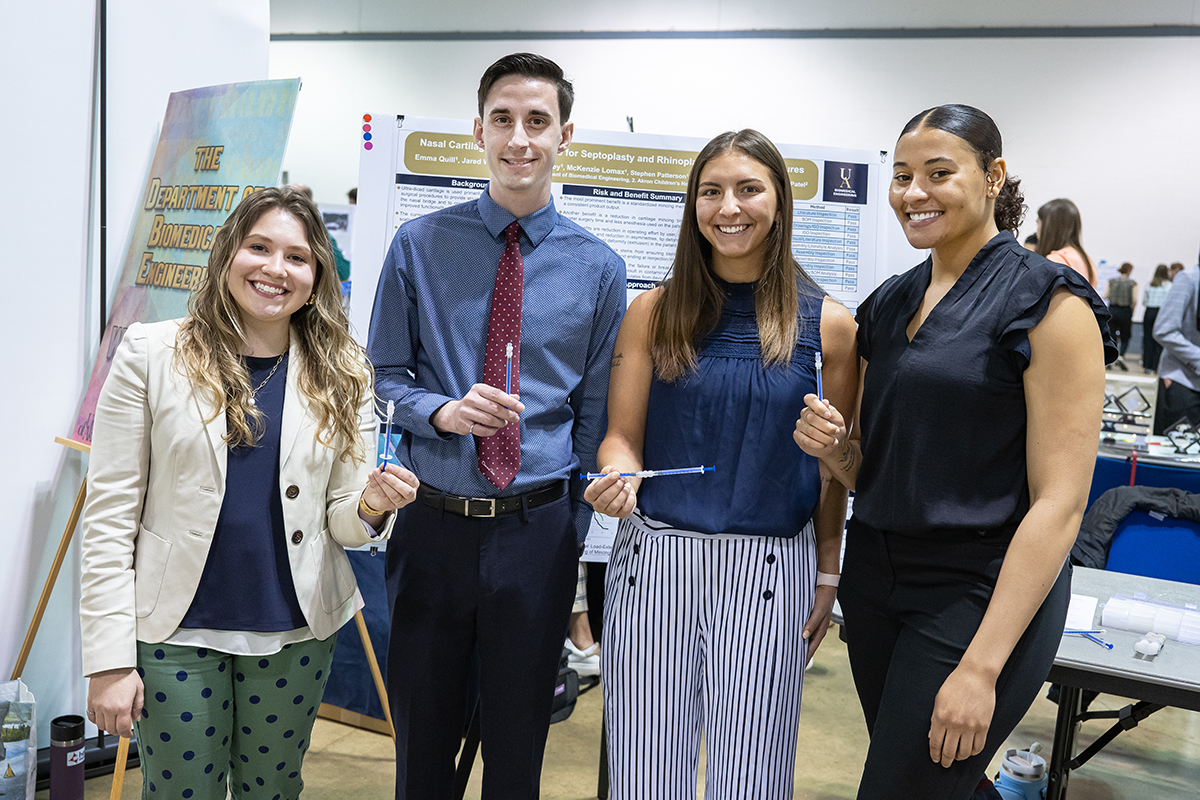
A closed-system method for rapidly mincing nasal cartilage for rhinoplasty.
Improved retractors for pediatric abdominal surgery and carpal tunnel surgery.
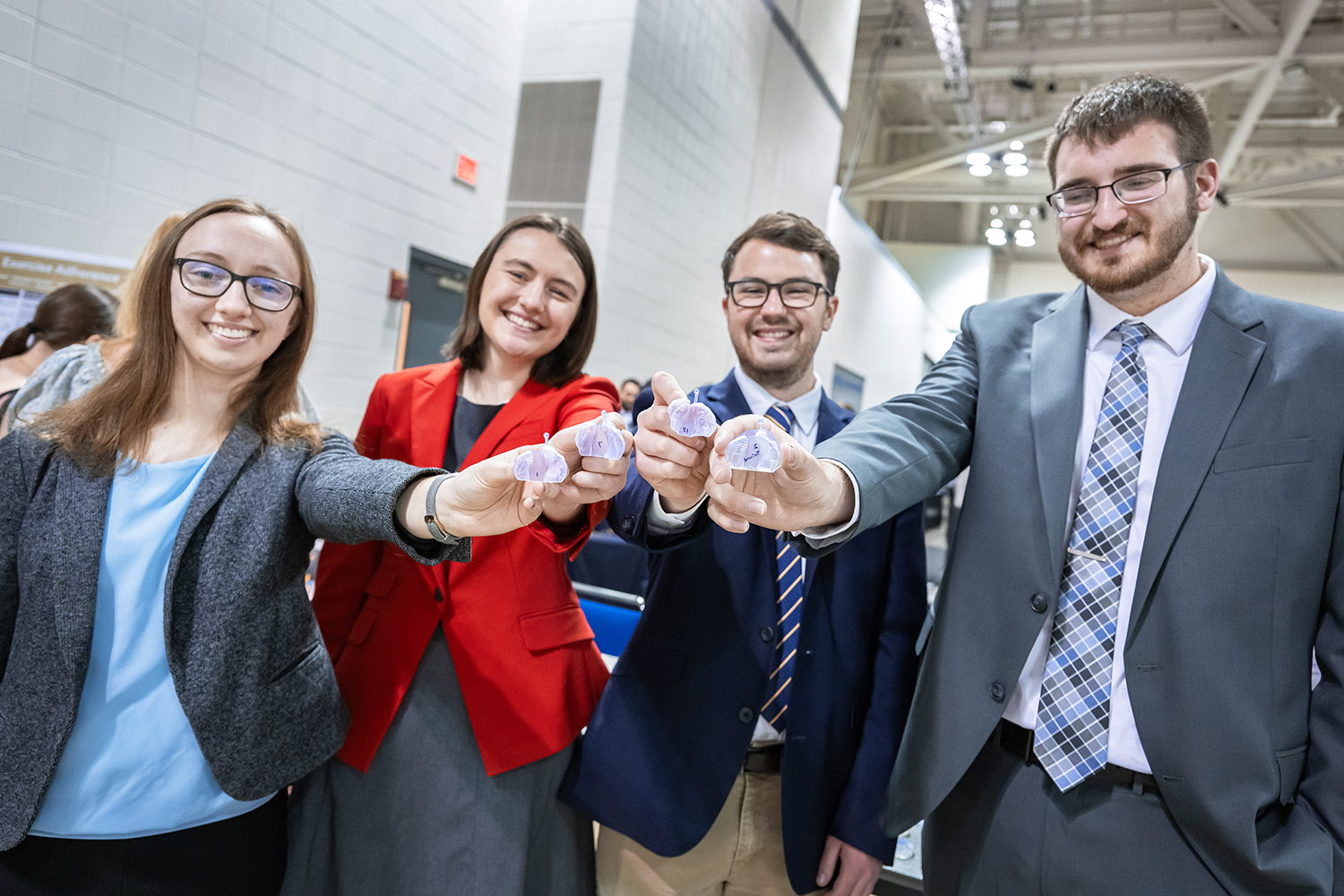
Patient-specific nasal alveolar molds to prepare infants with cleft lip for corrective surgery.
A microneedle patch for controlled drug delivery for Addison's disease.
A dissolvable staple and delivery device designed to secure skin grafts without the need to remove conventional staples or sutures.
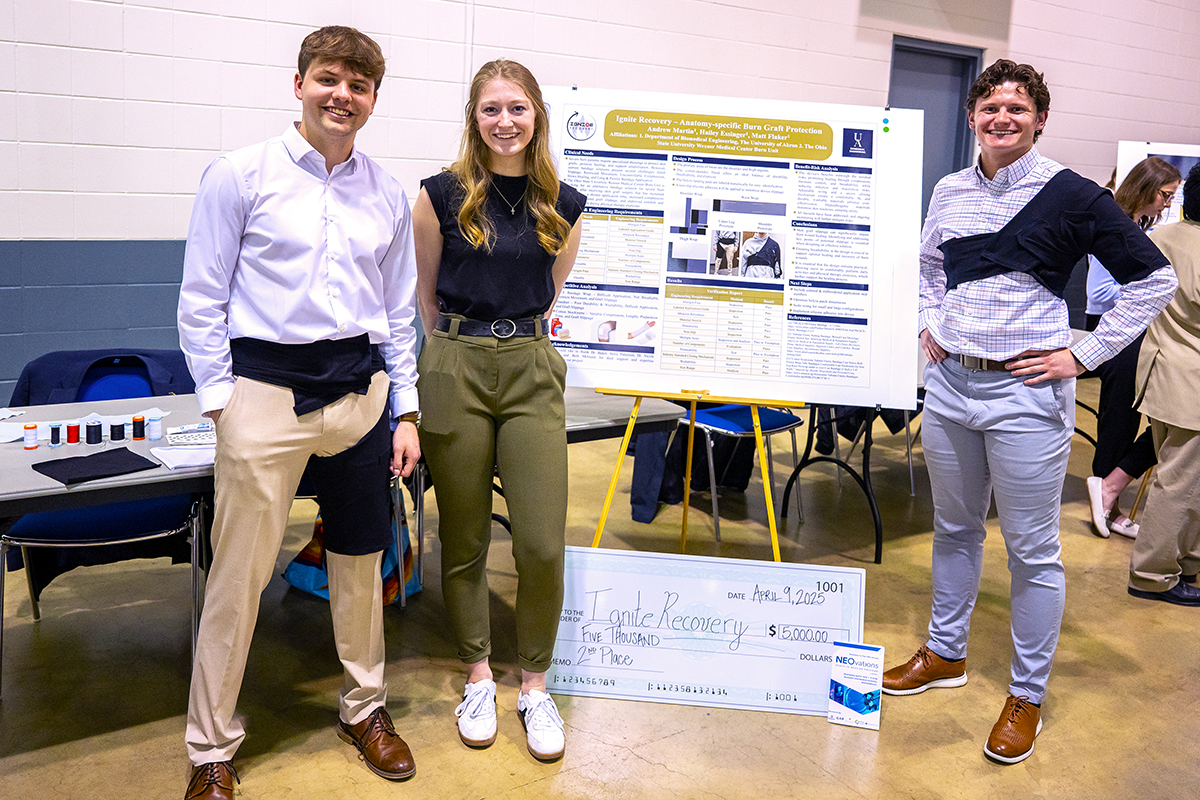
A modular burn dressing that earned second place in the 2025 NEOMED Bench-to-Bedside competition.
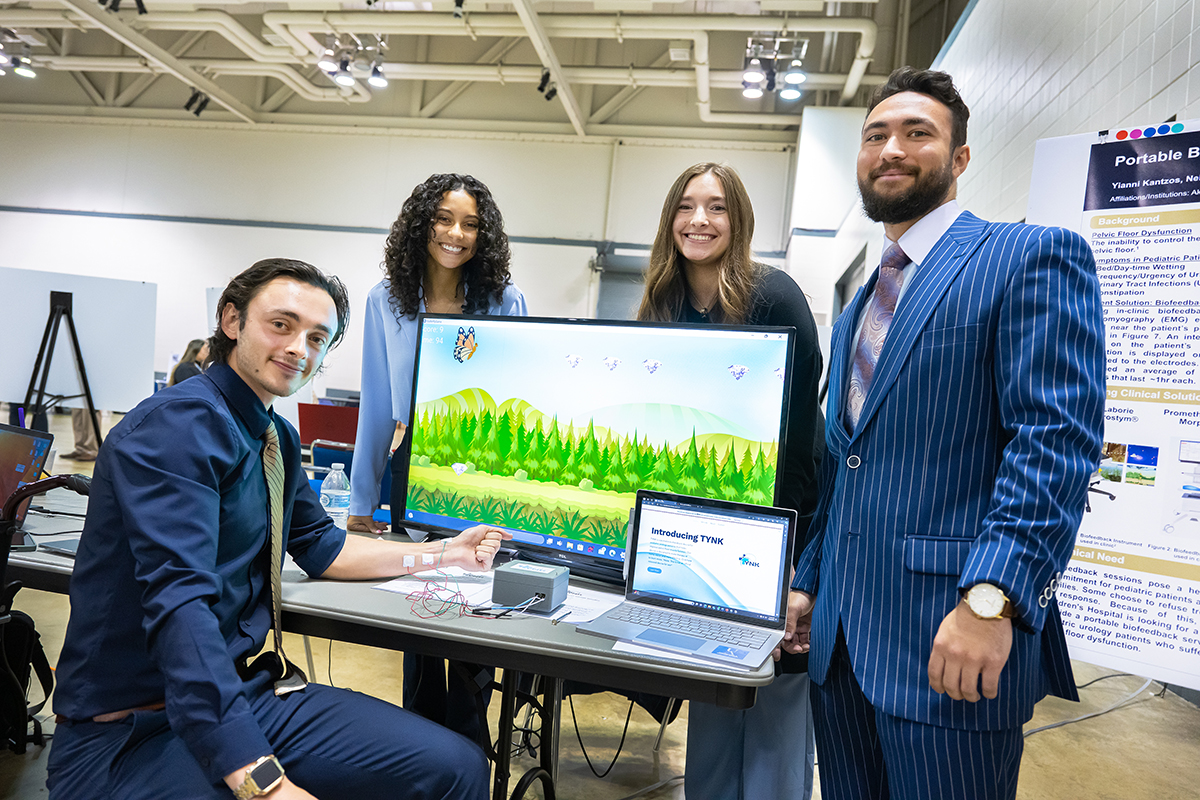
A portable biofeedback monitoring device for pediatric pelvic floor dysfunction.
A camera system for monitoring foot sores and the progression of peripheral arterial disease.
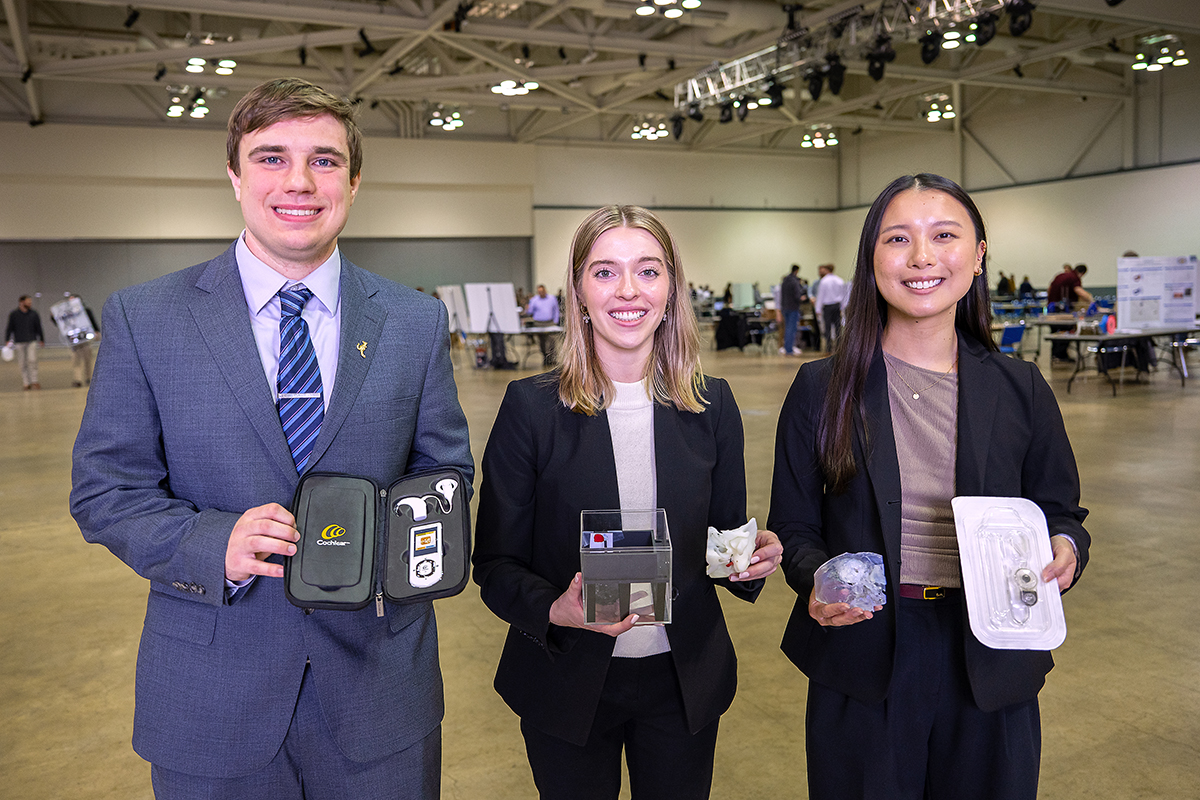
A reusable training model for tracking cochlear implant placement accuracy.
The University of Akron's Department of Biomedical Engineering welcomes project ideas from medical device companies, biomedical engineering firms, clinicians, hospitals and other health care organizations throughout the year for upcoming Capstone cycles.
Whether you have an early-stage concept, a clinical challenge or an existing device that could be improved, we invite you to discuss the possibilities with our faculty.
Associate Professor of Practice
Department of Biomedical Engineering
The University of Akron
jbaker@uakron.edu
330-972-4321